Enamel adhesion is improved if the steel's surface is roughened. I need a homogeneous roughness, a sort of even unevenness.
OK, so it's time to do some sandblasting!
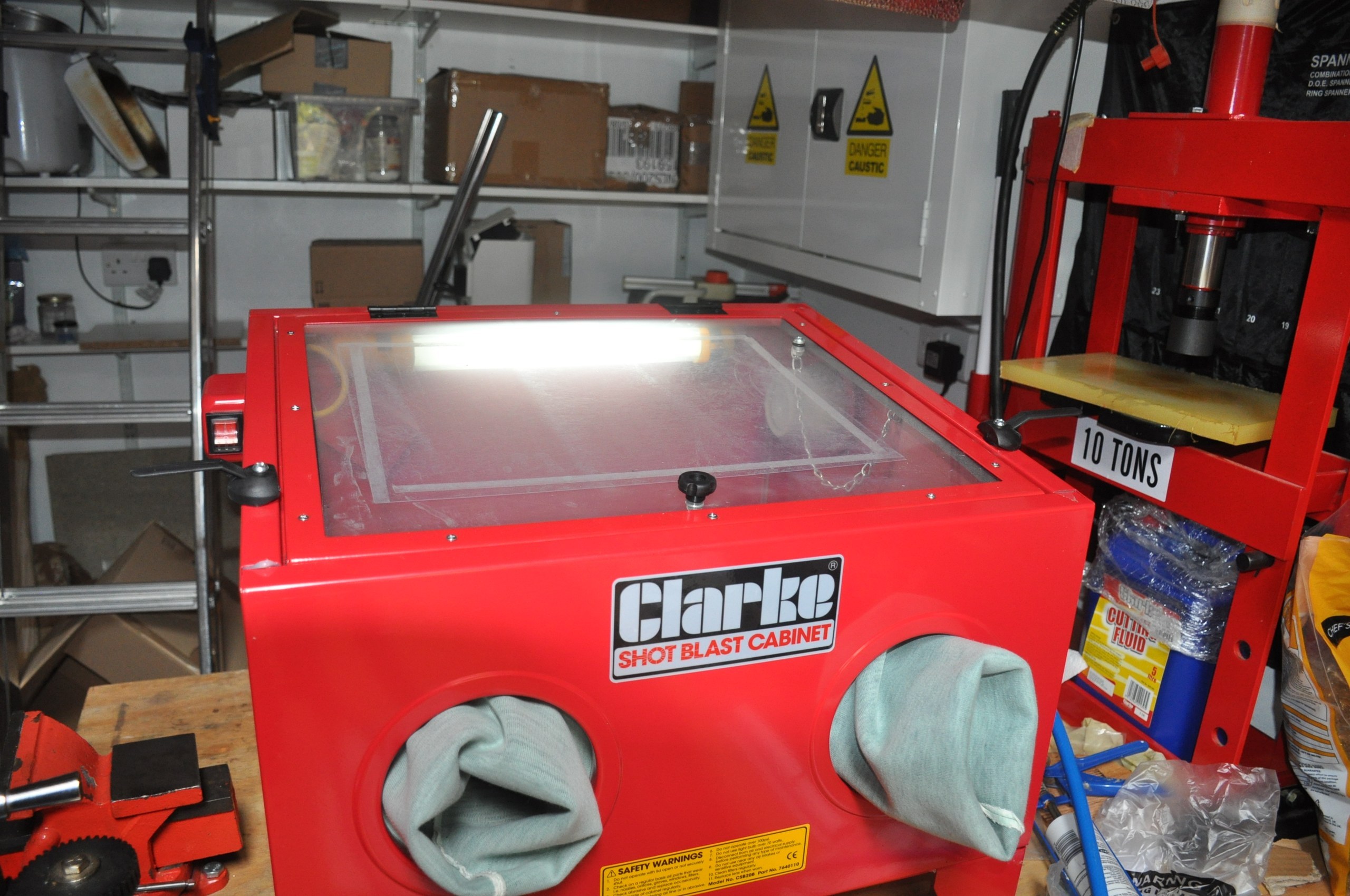
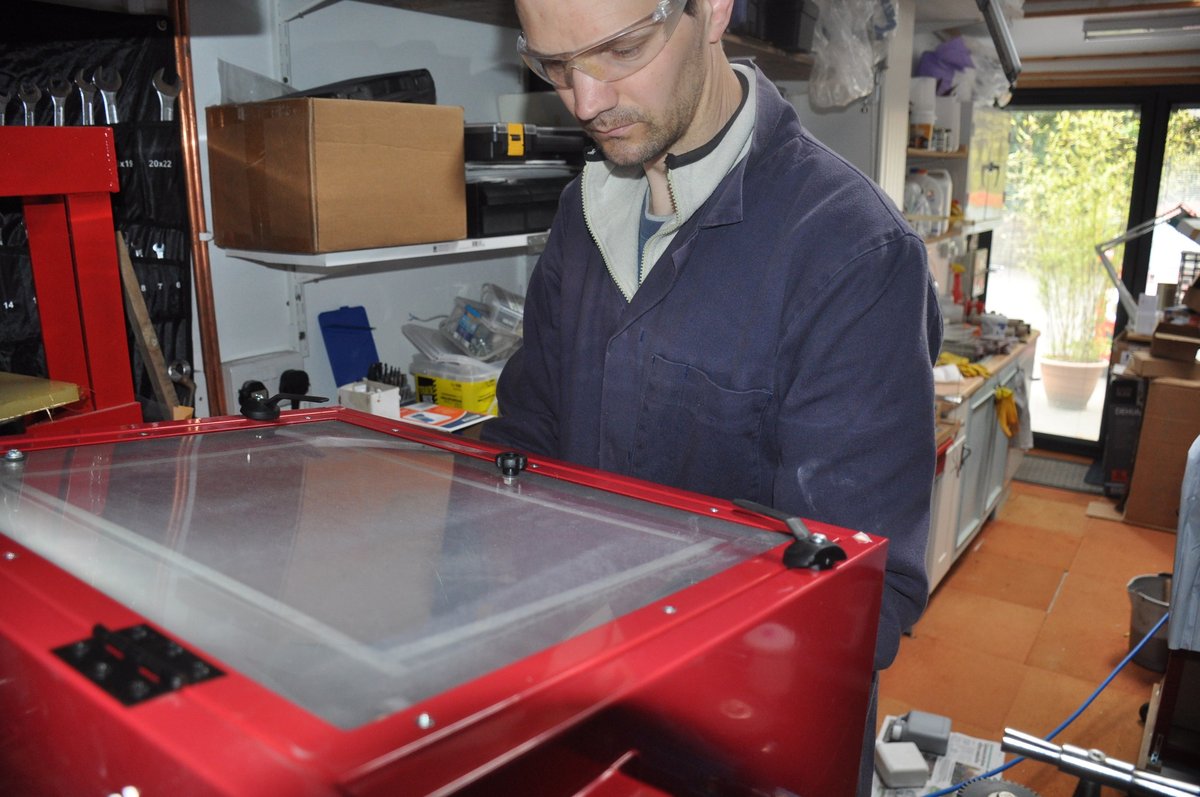
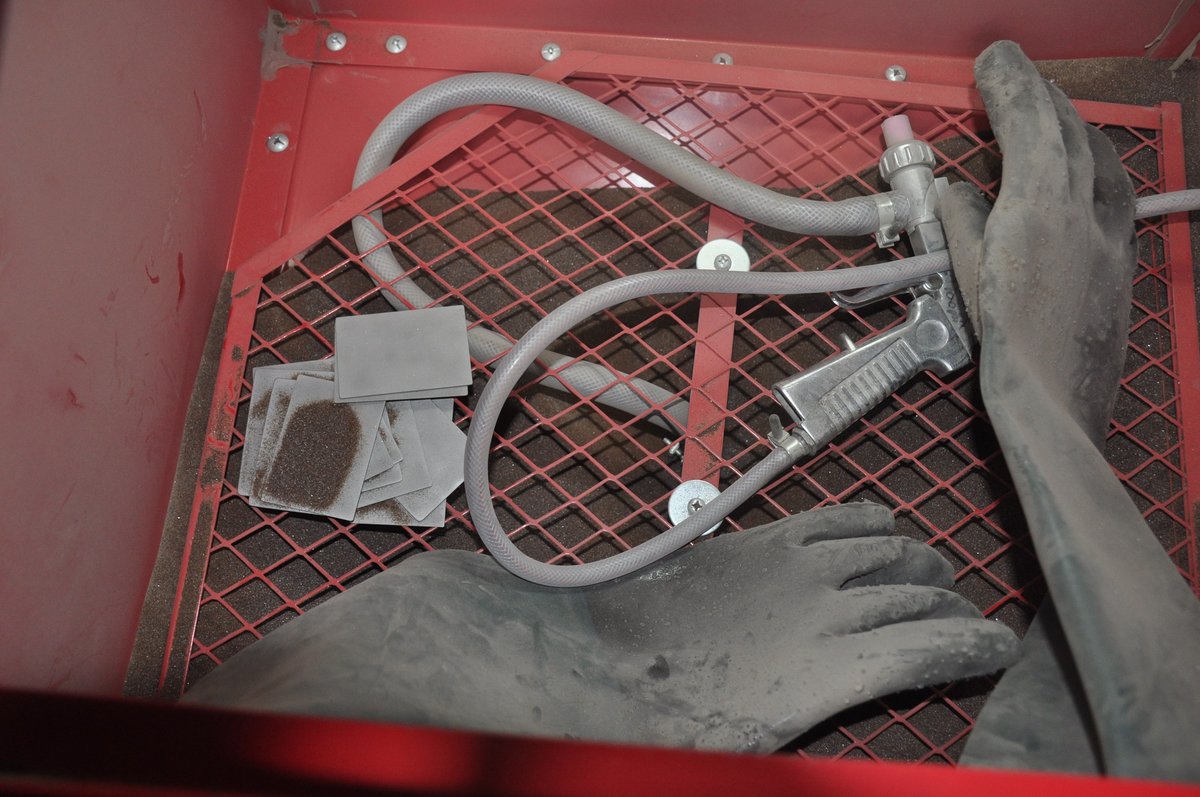
I'm using a blast cabinet, as shown above, with a compressor delivering about 5 bar of pressure. You can't see it on the photo but there's a vacuum cleaner hose connected to the right hand side; this is essential to keep the dust under control and to make sure the blast cabinet is properly sealed (as the vacuum helps to keep the door shut properly).
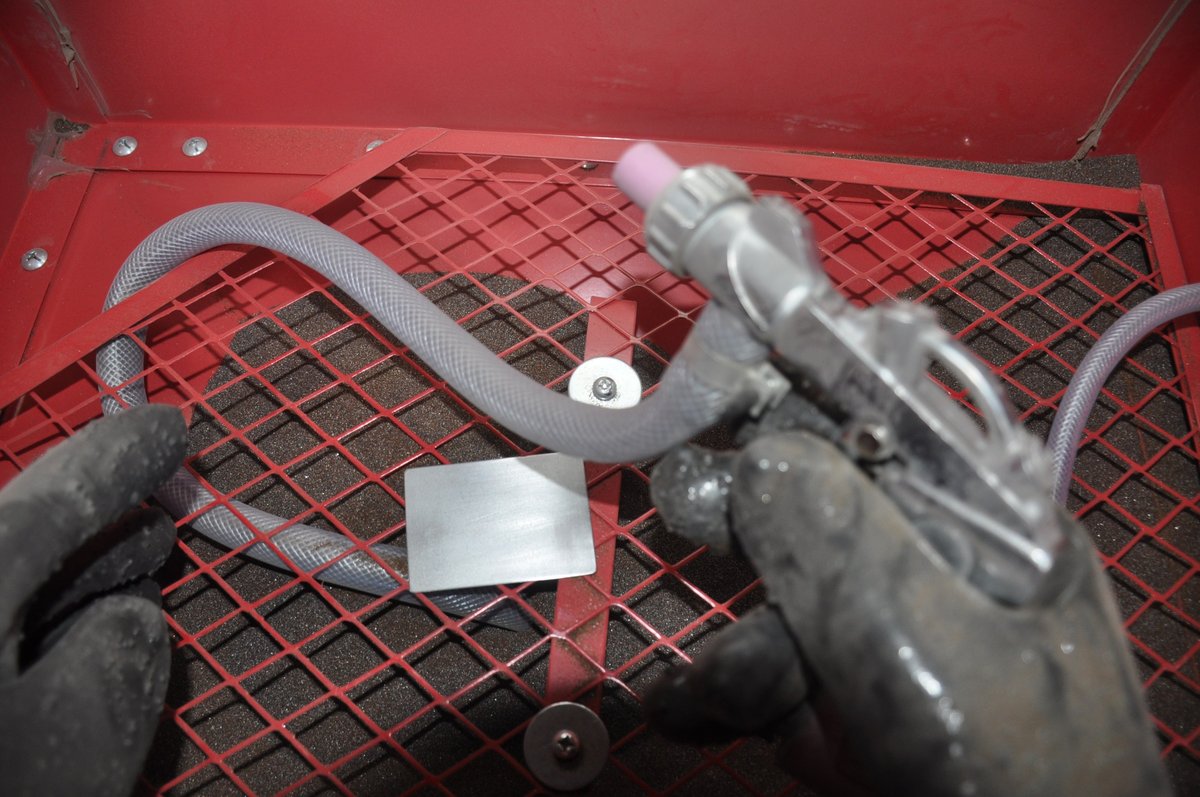
Inside the blast cabinet there's a pair of really heavy-duty gloves and the blast gun. It feels a bit clumsy trying to blast the small rectangle as it's hard to pick up the piece.
I'm using aluminium oxide grit size 60-80:
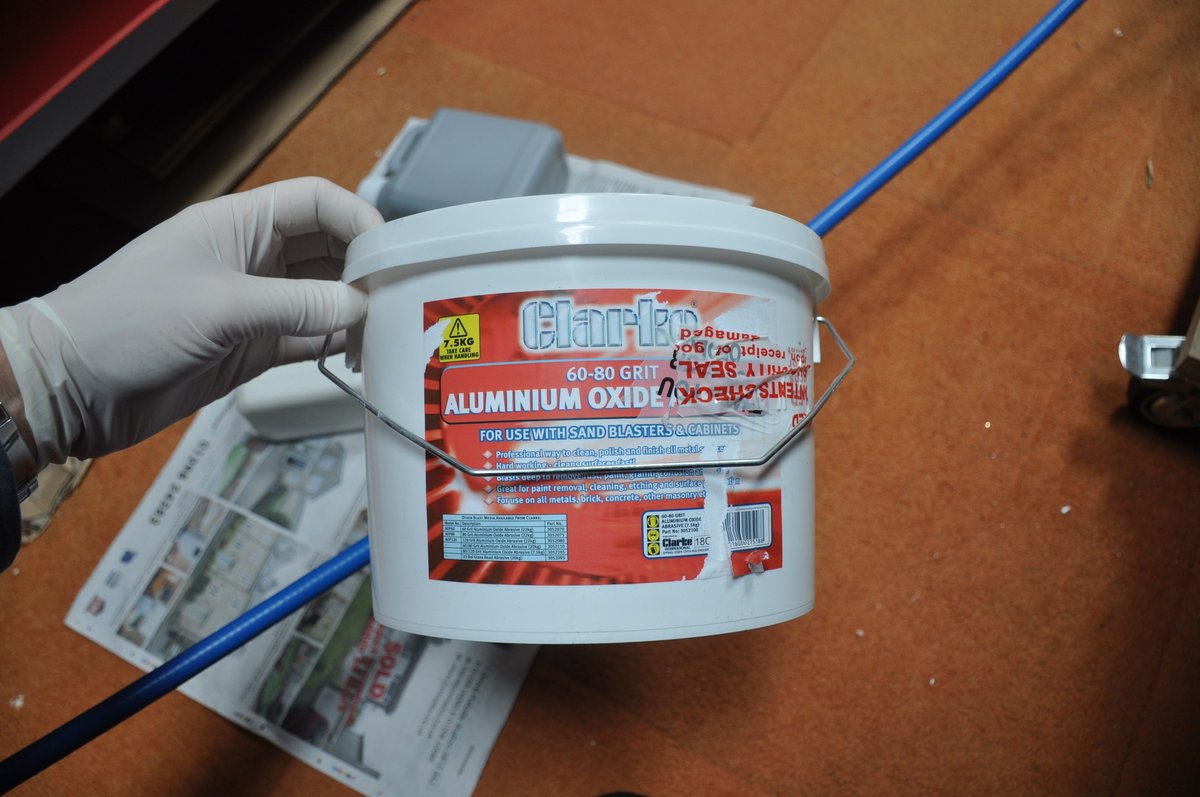
I got this 7.5kg size pot but I could do with a bit more as the shot tended to accumulate around the sides of the blast cabinet and didn't flow down to the collector at the bottom. Not too much of a problem, I just had to shake the cabinet from time-to-time to get the shot to move down, but it meant opening the cabinet more often than I'd like.
I didn't need to use a respirator as the vacuum did a good job, but probably I should have done, just for good measure.
Just to see the difference to the surface after sandblasting:
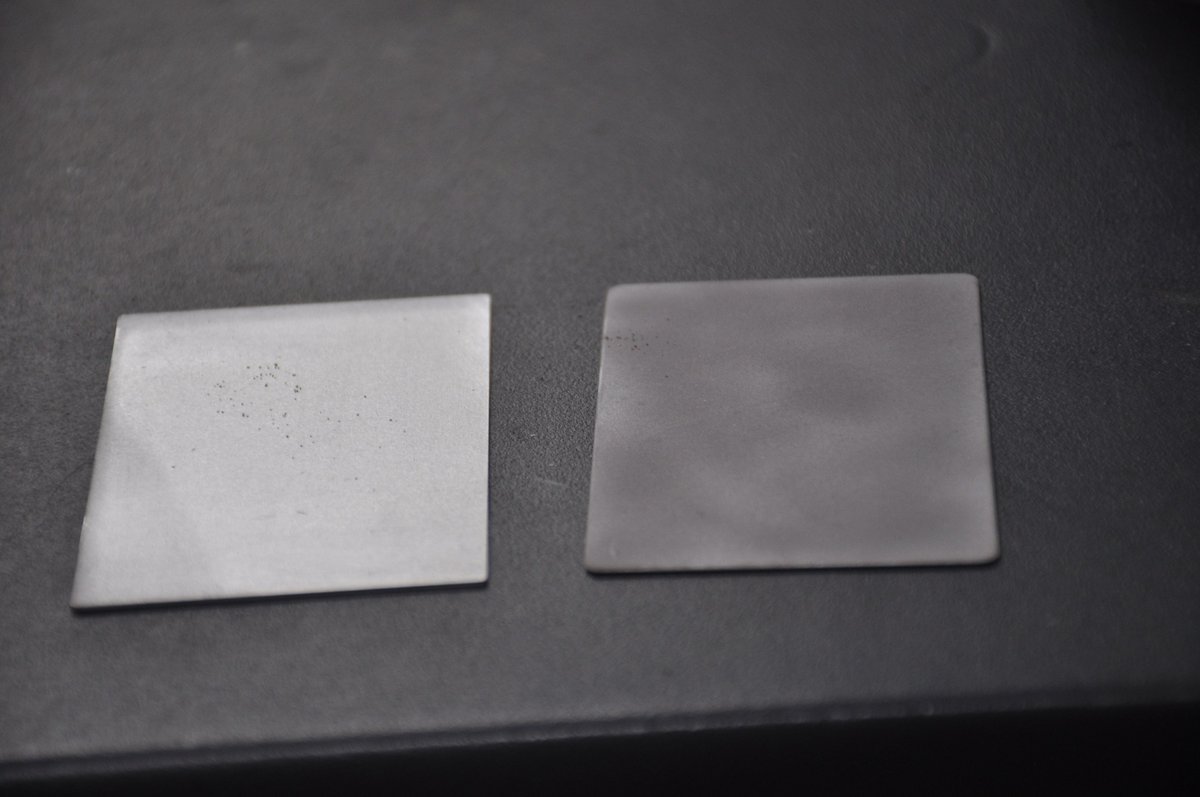
The one on the right has been blasted whereas the one on the left has not.
I decided to put all the pieces in the blast cabinet and do them one after the other without lifting the cabined lid. This way the dust levels are reduced.
After blasting, it's essential to remove any particles that could be on the surface of the metal. First I blasted with compressed air
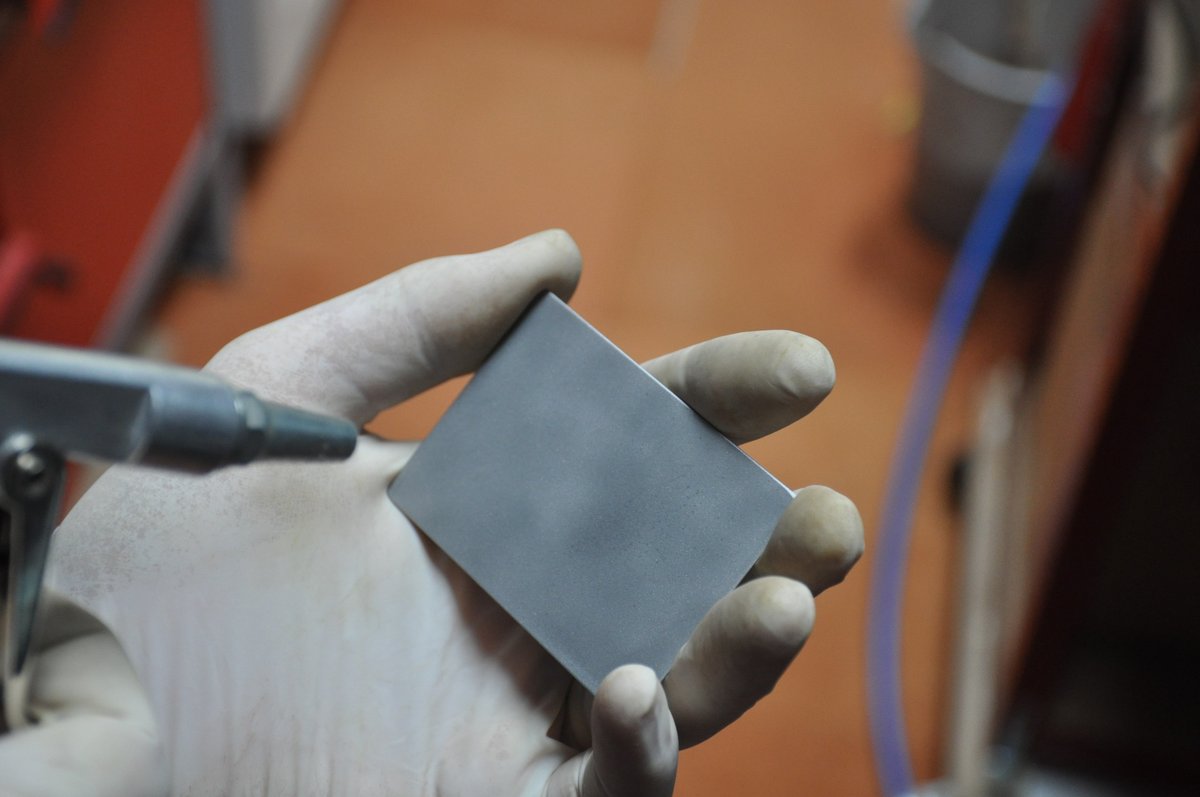 ,
and then I washed with water and a scrubbing brush. I tried drying the pieces with paper towel but found I couldn't do this because the surface was so rough; it just tore the paper towel to pieces leaving small pieces of paper all over the steel surface...damn! Instead I dried in the makeshift oven:
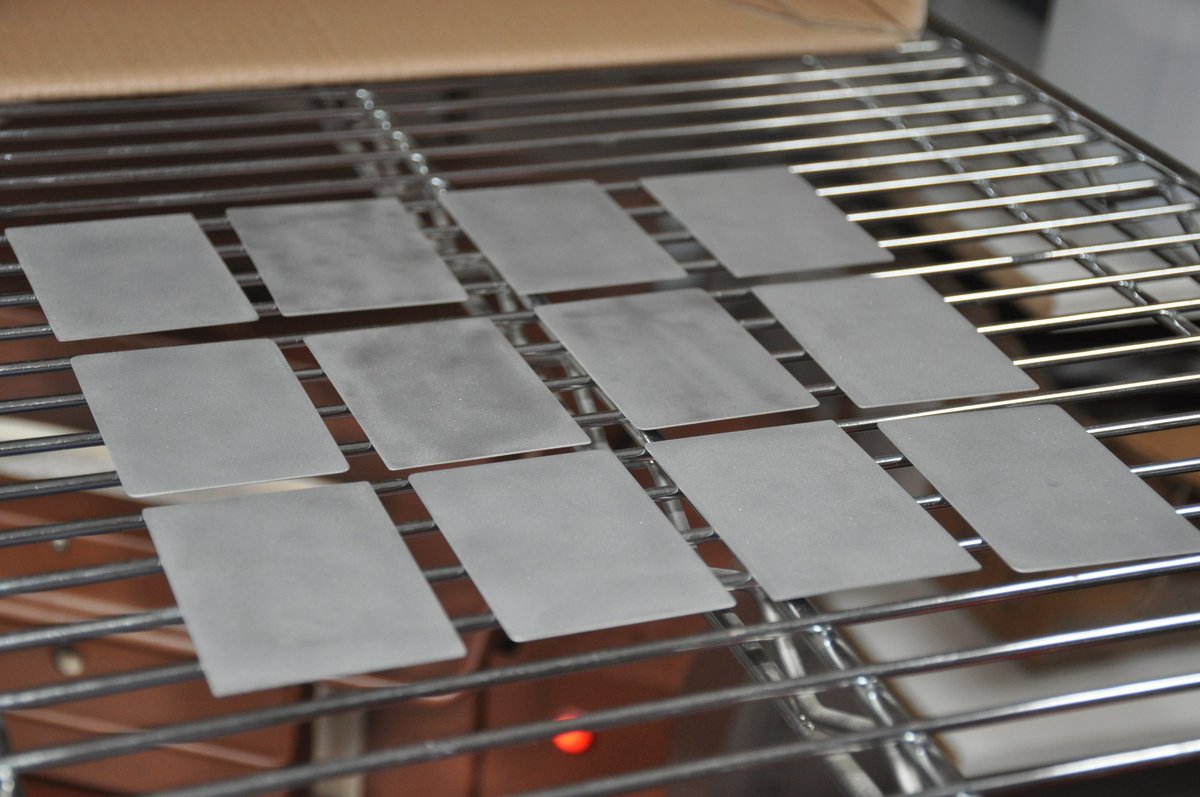 .
This proved not the be the best idea either, as some of the pieces started rusting. With a bit of thought, the way I understand it is, with the sandblasting, it increases the surface area of the steel and also makes pockets for water to reside, so the tendency to rust is much higher.
Instead I used a heat gun to quickly dry them before they could rust and this did work! - I don't have any pictures of this, unfortunately.